

NYC Compliance & Construction | ADA Door Hardware
ADA Compliant Door Locks for NYC Properties.
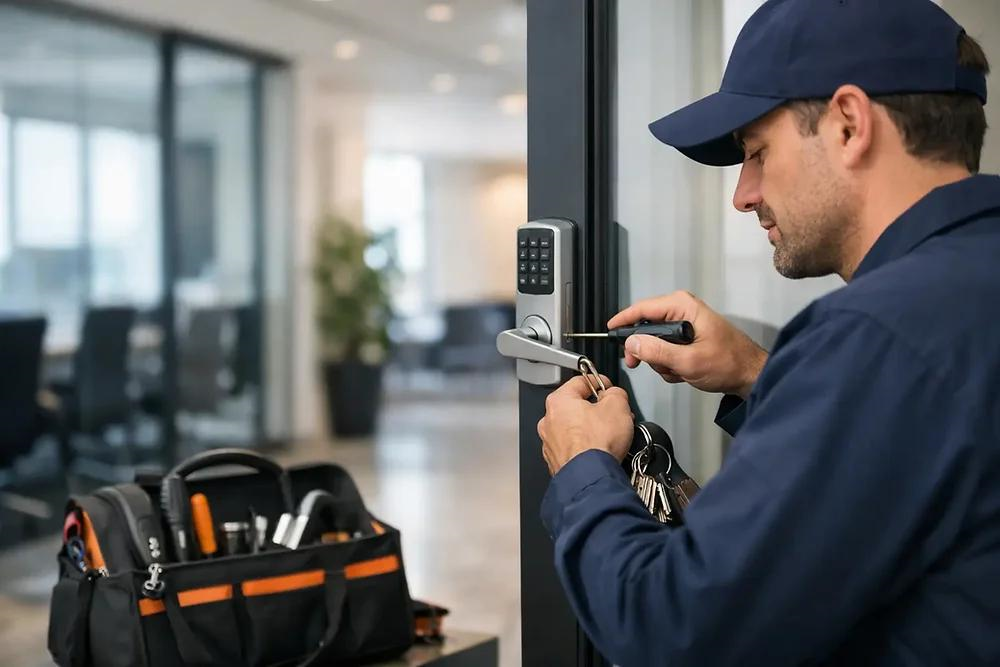
A round knob or a heavy door can stop a customer at your entrance before they ever reach the counter. Door hardware is one of the first things an accessibility complaint or inspection looks at, and the rules are specific down to the inch and the pound. Alto Locksmith & Security installs ADA compliant door locks in NYC, along with lever handles, exit devices, and closers set to the right height and force. Your doors open easily for everyone, and your hardware meets the standard inspectors check against.
- Licensed & Insured
- Upfront Pricing
- Commercial-Grade Hardware
- All Five Boroughs
Five ADA Rules Every Door Has to Meet
The ADA keeps door hardware rules short and specific, which makes them easy to check and easy to fail.
| Requirement | What the Rule Says | ADA Section |
|---|---|---|
| One-Hand Use | Handles, latches, and locks must work with one hand | 404.2.7 and 309.4 |
| No Tight Grip or Twist | No tight grasping, pinching, or twisting of the wrist | 309.4 |
| Operating Force | 5 pounds of force maximum to work the hardware | 309.4 |
| Mounting Height | Operable parts between 34 and 48 inches above the floor | 404.2.7 |
| Door Opening Force | 5 pounds maximum on interior hinged doors, with different rules for fire doors and exterior doors | 404.2.9 |
| Closing Speed | At least 5 seconds for a closer to swing the door from 90 degrees open to 12 degrees from closed | 404.2.8 |
Note: The ADA door lock height requirements apply to the part you actually touch: the lever, the thumbturn, the push bar, or the keypad buttons. You can read the full text in the 2010 ADA Standards for Accessible Design.

Who Has to Follow ADA Door Hardware Rules in NYC
Most businesses that serve the public are covered, including ones in older buildings.
Which Locks and Handles Meet ADA Rules
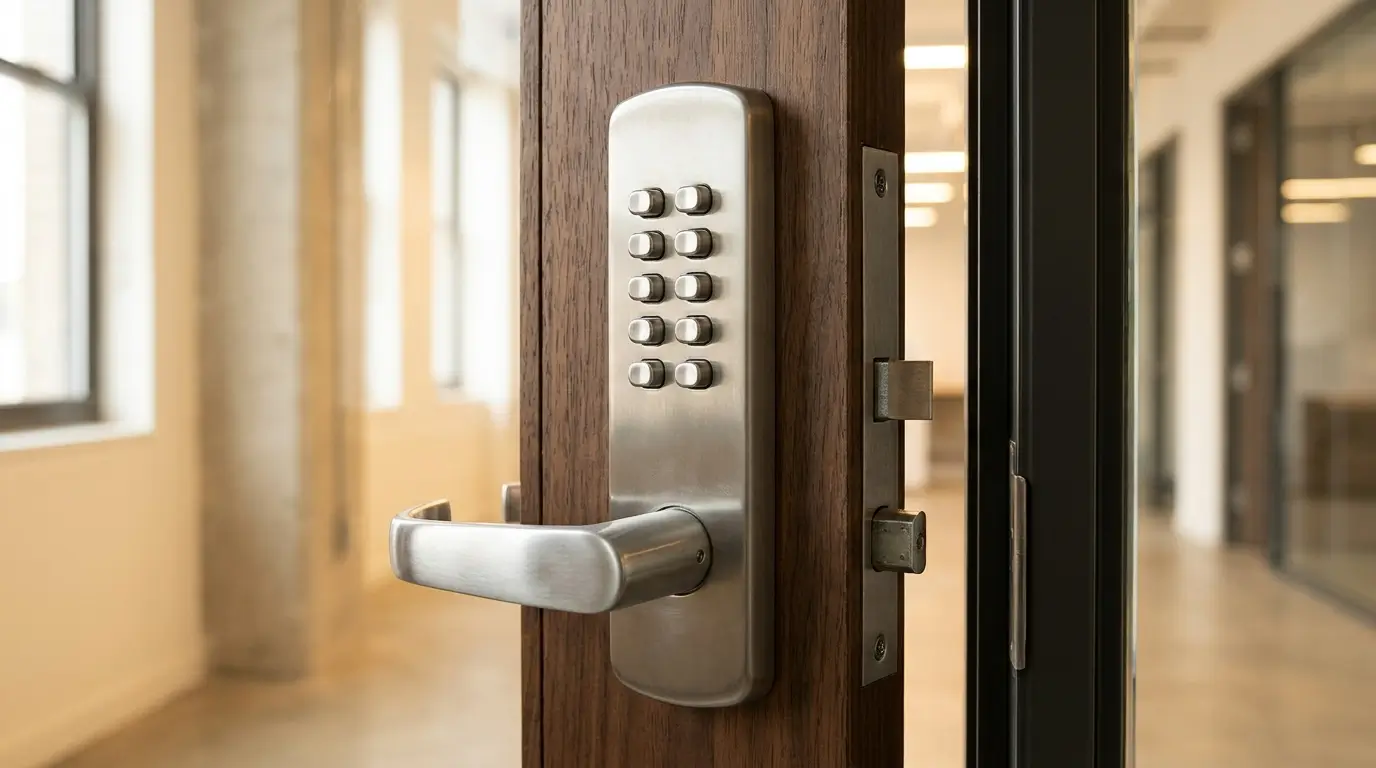
The difference between compliant and non-compliant hardware often comes down to shape and placement.
Usually Compliant
Usually Not Compliant
These are the common ADA Door Problems we fix as well!
Our ADA Door Hardware Solutions for Every Entrance
Each service below turns a door that’s hard to use into one anyone can open.
ADA Compliant Lever Handle Installation
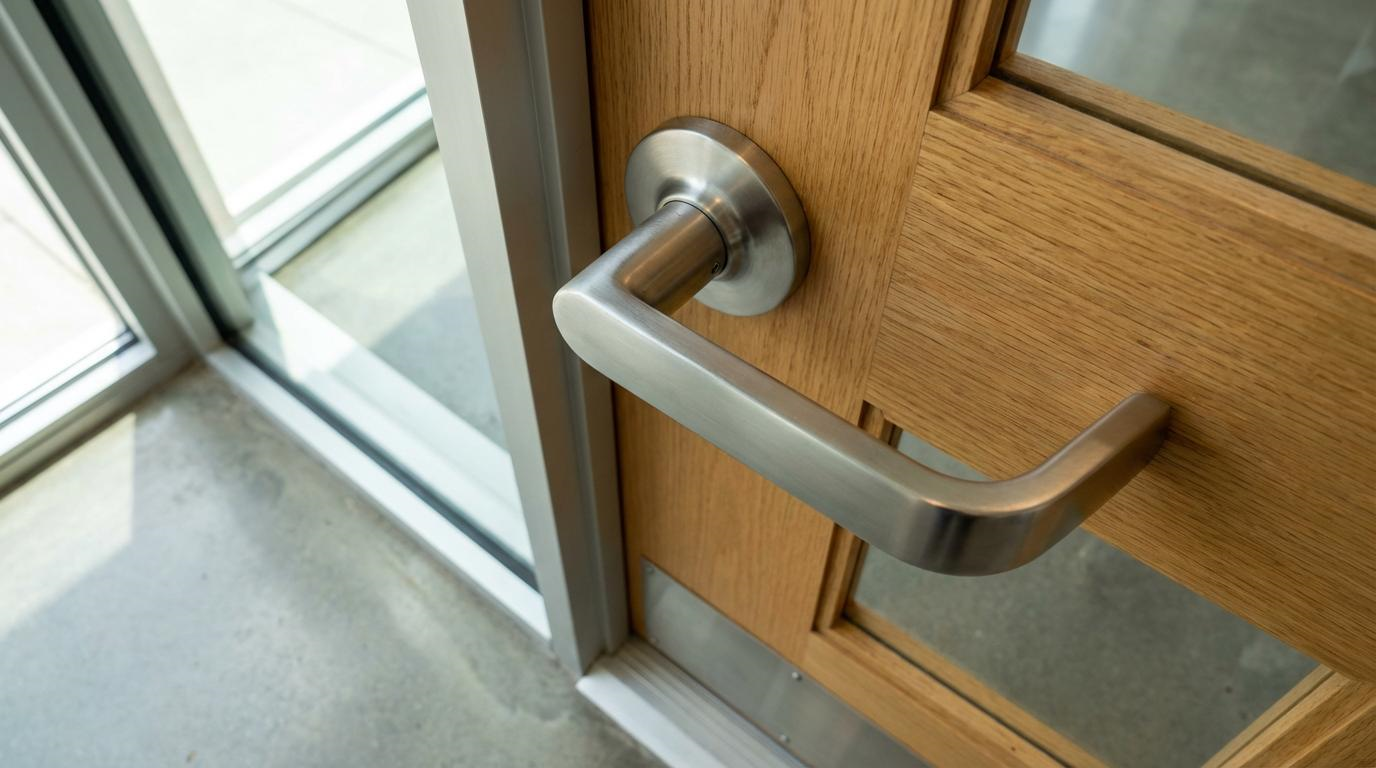
Round knobs are one of the most common barriers at business doors, and they’re hard to use for anyone with arthritis, limited grip, or full hands. A single knob on a restroom or entrance can draw a complaint. Our ADA compliant lever handle installation in NYC replaces knobs with commercial-grade levers mounted in the range. Anyone can then open the door with one easy push, even with their hands full.
ADA Lock Installation
A lock that needs a firm pinch or a tight twist works against the rules, even when the handle is fine. That often means a small thumbturn or an old mortise lock on a public door. We fit ADA lever handle locks, accessible thumbturns, and mortise locks with lever trim at compliant heights as part of every ADA lock installation in NYC. Customers and staff get in without struggling, and the door still locks securely.
ADA Compliant Exit Device Installation
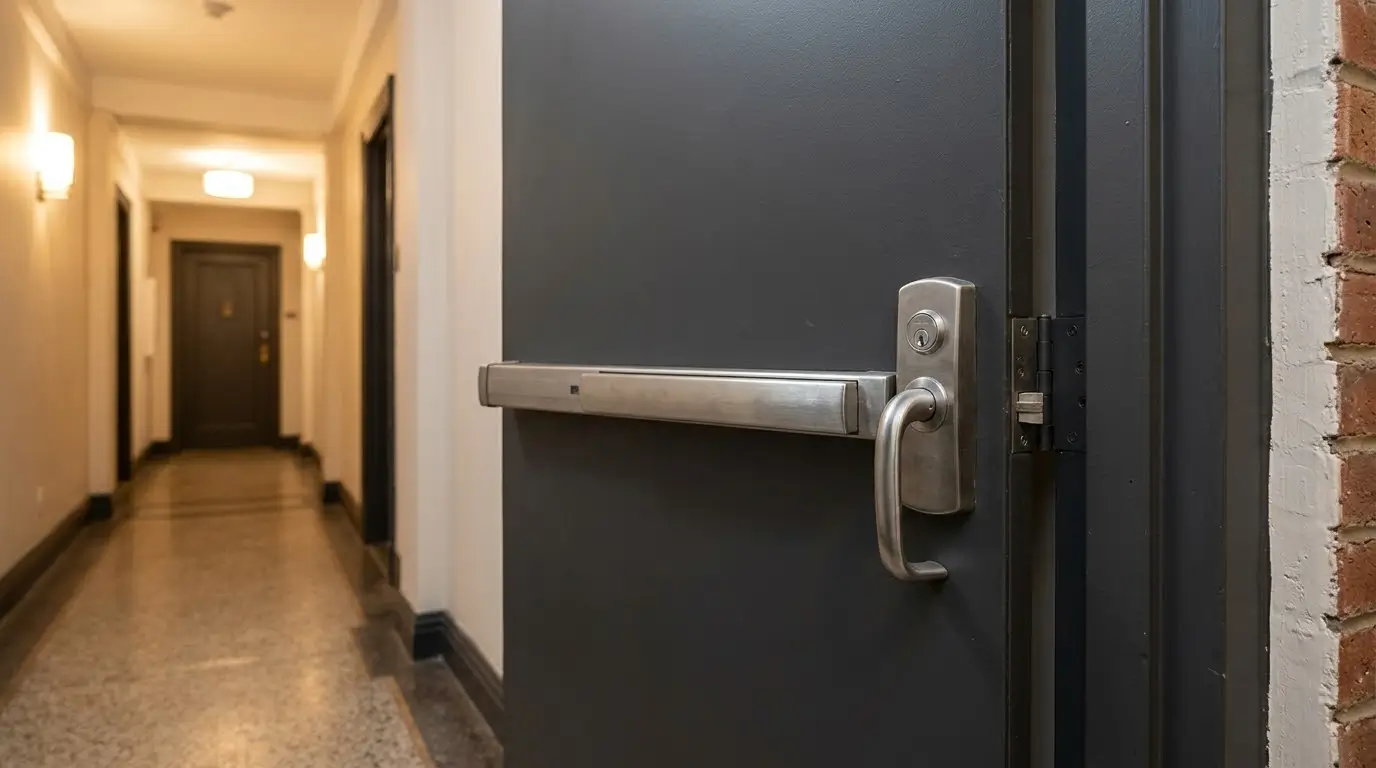
Exit doors need hardware that opens with one push from the inside, and old or damaged bars can stick or require too much force. The wrong device can fail an ADA review and a fire inspection at the same time. Set at the correct height and adjusted for a light, smooth push, the panic bars and exit devices from our ADA compliant exit device installation in NYC let people leave quickly while the door still locks from outside.
Door Closer Adjustment and Replacement
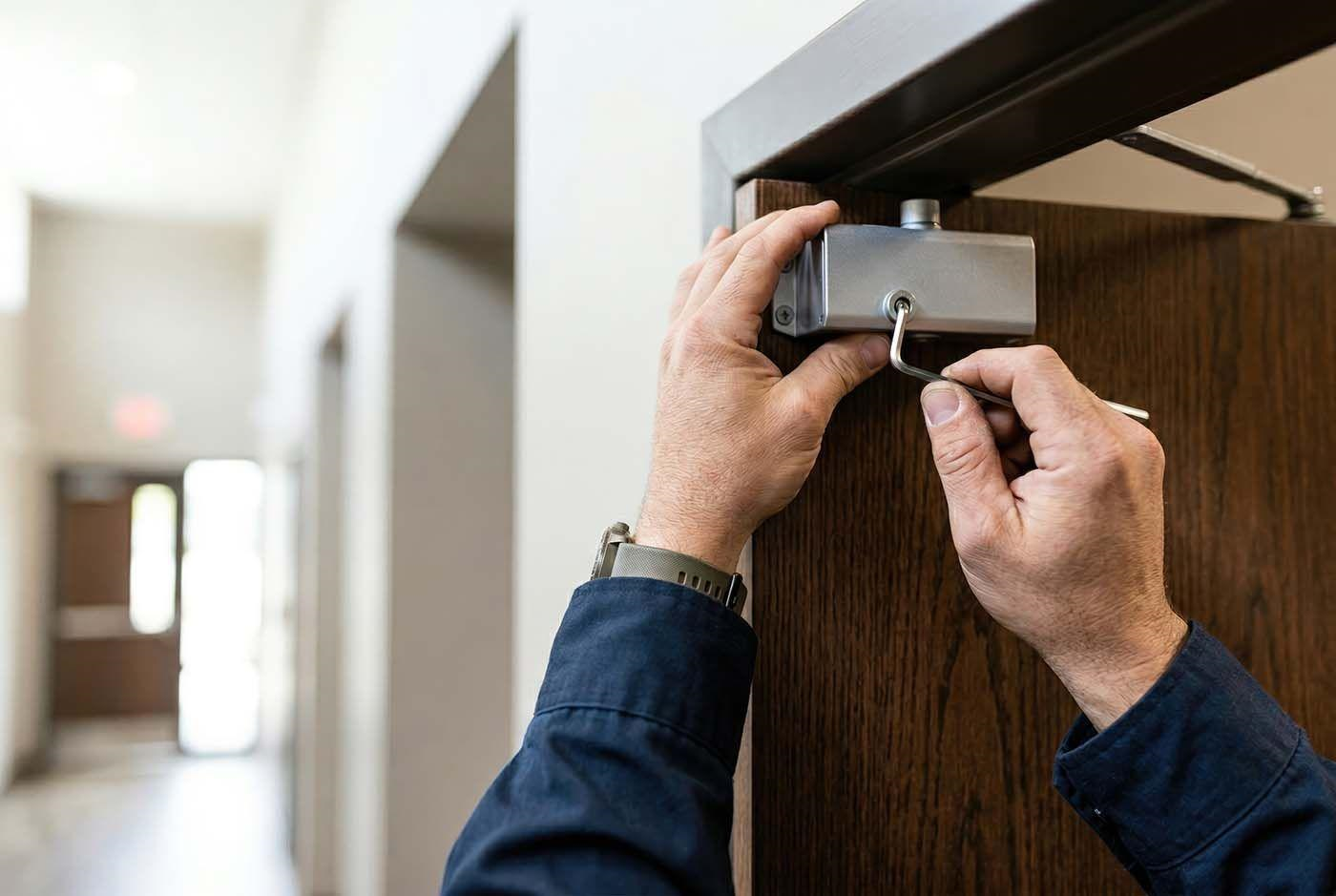
A heavy door can block access even when every handle is right. Closers set too tight make interior doors hard to push, and closers set too fast can shut on someone mid-step. Alto Locksmith & Security adjusts or replaces closers to meet the opening force and closing speed limits, which keeps the door easy to open and safe to pass through.
Accessible Keyless Entry
Small keys and tight keyways are hard for many people to use, especially at staff and back-of-house doors. Keypads, fob readers, and smart locks remove the need for a key, as long as they’re mounted at the right height. Our experts install keyless entry systems with large, easy-to-press controls in the range. Staff get in with a tap or a short code, with no fumbling for keys.
ADA Door Hardware Upgrade for Businesses
Most businesses have more than one problem door, from the entrance to the restroom to the back office. Fixing them one complaint at a time costs more and leaves gaps. With our ADA door hardware upgrade for businesses in NYC, we review every door in your space and replace non-compliant hardware in one planned visit, scheduled around your hours. Your whole space meets the standard at once, without repeat visits or surprise complaints.
How Our ADA Door Hardware Upgrade Works
The process is quick, and most businesses stay open the whole time.
Fix Your Door Hardware Before a Complaint Does It for You
The easiest accessibility improvement in most businesses sits right at the front door. Give us a call or request a quote online. Our team will upgrade your door hardware with as little disruption to your day as possible.
Frequently Asked Questions
What are the ADA door lock height requirements?
Operable parts of door hardware, including handles, locks, and latches, must sit between 34 and 48 inches above the finished floor. The measurement is taken to the part a person actually uses, such as the lever or thumbturn.
Are round doorknobs allowed under the ADA?
Round knobs generally don’t meet the ADA’s hardware rules on accessible doors because they require a tight grip and a twist. Replacing them with lever handles is one of the most common and affordable accessibility upgrades.
Does my existing business need ADA-compliant door hardware?
In most cases, yes. Businesses open to the public must remove barriers where it’s readily achievable, and federal rules name installing accessible door hardware as an example. Swapping knobs for levers is usually simple and low-cost.
Do deadbolts have to be ADA compliant?
Locks used only for security, such as a deadbolt locked after closing and not used during normal entry, are generally exempt under ICC A117.1, the accessibility standard NYC’s Building Code follows. Locks used for everyday entry still need to meet the hardware rules.
Are panic bars ADA compliant?
Most panic bars meet the ADA’s hardware rules because they open with a single push. They still need to be mounted at the correct height and work smoothly, which is why worn or sticking devices should be repaired or replaced.
How much force should it take to open an interior door?
No more than 5 pounds for interior hinged doors that aren’t fire doors. Fire doors can use the minimum force the local authority allows, and exterior doors have no specific ADA force limit.
Can keypad locks be ADA compliant?
Yes, when the keypad is mounted between 34 and 48 inches, and the buttons are easy to press without fine finger control. Keypads also remove the need to grip and turn a small key.
How long does an ADA hardware upgrade take?
A single lever handle swap usually takes well under an hour. A full business upgrade depends on the number of doors, and we schedule it around your hours to avoid disrupting customers.
Can you install ADA hardware on fire-rated doors?
Yes, we install lever handles, locks, and exit devices rated for fire doors. That keeps the door accessible without affecting its fire rating.