A broken key stuck in a lock is a common problem, and it usually happens at an inconvenient time. The key may snap while you are unlocking your front door in the morning or locking your office at night. Once part of the key is trapped inside the cylinder, the lock often stops working until the piece is removed.
The safest response is to stop turning the key and keep the broken half that stayed in your hand. Home remedies such as superglue or sharp tools can push the piece deeper or damage the pins inside the lock. Professional broken key extraction removes the stuck piece without harming the cylinder, so in most cases you can keep using the same lock with a new key.
Why Keys Break Inside Locks
Keys rarely break for no reason. In most cases, the problem builds up over time until one turn puts too much stress on the metal. The following are the most common causes:
- Worn or Old Keys: Keys thin out and develop small cracks after years of daily use, especially near the bow where you hold them.
- Dirty or Worn Lock Cylinders: Dust and grime make the pins stick, so the key needs more force to turn each time.
- Forcing a Stiff Lock: Twisting hard on a lock that does not turn easily puts heavy pressure on the thinnest part of the key.
- Poorly Cut Duplicate Keys: Copies made from other copies may not fit the pins correctly, which makes them catch and bend.
- Cold Weather and Frozen Locks: Freezing temperatures can stiffen the parts inside a lock and make the metal more brittle.
Cold weather is hard on locks and keys alike. New York City’s 2025–26 winter averaged 31.9 degrees in Central Park, the coldest in 11 years, and freezing temperatures can stiffen lock cylinders until forcing a key becomes the easiest way to snap it. A lock that suddenly feels harder to turn in winter is a sign to stop and warm it up instead of using more force.
What to Do When a Key Breaks in a Lock
Your first few actions decide how easy the key will be to remove. Follow these steps to protect the lock and avoid making the problem worse.
1. Stop Turning the Key
As soon as you feel the key snap, stop moving it. Turning the remaining part or pushing on the lock can force the broken piece deeper into the cylinder. Leave the lock in its current position until you decide on the next step.
It also helps to remember which way the key was turned when it broke. A locksmith may need to rotate the cylinder back to its starting position before removing the piece, and this detail can make the job faster.
2. Check if Part of the Key Is Visible
A quick look at the keyhole with a flashlight tells you a lot about the next step. Look for one of these situations:
- A piece sticking out that can be gripped
- A piece sitting flush with the lock face
- A piece pushed deep inside the cylinder
Only the first situation is worth trying to fix gently by hand. In the other two, digging at the key usually damages the pins, so a photo of the keyhole for the locksmith is the better choice.
3. Keep the Broken Piece
Hold on to the part of the key that stayed in your hand. A locksmith can often use it to cut a new key by matching it with the piece that is removed from the lock. Store it somewhere safe so it does not get lost while you wait for help.
If you have a spare key for the same lock, do not try to use it while the broken piece is still inside. The spare will not fit properly and could push the stuck piece further in.
4. Secure the Door
A broken key can leave your property unlocked or hard to close. The right move depends on your situation:
- Door Left Open: Stay nearby or ask someone you trust to watch the entrance until the lock is fixed.
- Locked Out: Avoid forcing the door or trying a window, since this can cause damage that costs more than the lockout.
- Storefront or Office: Let staff know about the problem so no one tries to open the lock with another key.
Keeping the door secure and the lock untouched gives the locksmith the best chance of a clean extraction. It also prevents a small problem from turning into a security risk.
5. Call a Locksmith
A professional locksmith has the tools to remove the piece without harming the lock. Share where the key broke and how much of it is visible, since this helps the technician bring the right equipment. Calling early also prevents the problem from getting worse through repeated attempts.
Can You Remove a Broken Key Yourself
In a few simple cases, a broken key can be removed at home. Most of the time, though, DIY attempts cause more damage than the broken key itself.
When a Simple Fix Might Work
If a clear piece of the key sticks out of the lock, you can try gripping it with needle-nose pliers or tweezers. Pull straight out with slow, gentle pressure, without twisting or bending the piece. A small amount of lock lubricant can sometimes help the key slide out more easily.
Stop right away if the key does not move. Pulling harder can snap the piece again and leave an even smaller part inside the lock. Once the piece is too small to grip, removing it safely requires professional tools.
Methods That Can Damage Your Lock
Some popular tricks found online can ruin a lock completely. Avoid these methods:
- Superglue on a Stick: Glue can drip into the cylinder and bond to the pins.
- Drilling the Lock: Drilling destroys the cylinder and usually means replacing the lock.
- Paper Clips and Pins: Thin household items can bend inside the lock and get stuck.
- Forcing the Door: Pushing or prying can damage the frame and the lock at the same time.
Each of these methods can turn a simple repair into a full lock replacement. Professional broken key extraction is usually faster and protects the lock you already have.
How a Locksmith Handles Broken Key Extraction
A trained locksmith follows a careful process to remove the broken piece and restore the lock. Most jobs include these steps:
- Inspect the Lock: The locksmith checks where the key broke and how deep the piece sits.
- Remove the Broken Piece: Thin extraction tools grip the key and slide it out of the cylinder.
- Check the Cylinder: The pins and the plug are inspected for damage or wear.
- Cut a New Key: A working key is cut from the broken pieces or from the lock itself.
Extraction tools are thin metal blades with small hooks or teeth along the edge. They slide alongside the broken key, catch its grooves, and pull it out without forcing the pins out of place. This approach keeps the lock intact, so in most cases the same lock can be used again right away.
Tell our team at Alto Locksmith & Security what happened when you reach us, including where the key snapped and how much of it you can see. That detail lets our technician arrive with the right extraction tools for your lock. Every broken key extraction we perform ends with a working key in your hand and a lock that turns smoothly again.
What to Do If a Key Breaks in Your Car Door or Ignition
A key that breaks in a car needs more care than one stuck in a house lock. Car door locks and ignitions have more parts, and some keys also carry a chip that the car needs to start.
Start by leaving the ignition alone. Do not try to start the car or turn the ignition with the piece that remains, since forcing it can damage the ignition cylinder. An ignition is more complex and more costly to repair than a door lock, so a gentle approach protects it.
Older cars are more likely to have worn keys and tired ignitions. Passenger cars on U.S. roads now average 14.5 years old, and after years of daily use, a key that bends easily or an ignition that sticks can lead to a key snapping at the worst moment.
Many modern car keys also contain a transponder chip in the plastic head. Even if the blade breaks, keep the head of the key, since the chip may still be usable. A locksmith can remove the broken blade, cut a new one, and program a new key if the old chip cannot be reused.
What Happens After the Key Is Removed
Once the broken piece is out, the locksmith decides on the best way to get your lock working again. Most jobs end with one of these options:
- New Key Cut From the Broken Pieces: The two halves are matched together, and a fresh key is cut from the pattern.
- Rekeying the Lock: If the old key was worn or copied many times, the lock can be rekeyed to work with a new, clean key.
- Repairing or Replacing a Damaged Lock: Locks with broken pins or a worn cylinder may need repair or replacement.
The right choice depends on the condition of the lock and the key. A locksmith will explain the options before starting any additional work. If the lock was already hard to turn before the key broke, fixing the cause now can prevent another broken key in the future.
How to Prevent Keys From Breaking
Most broken keys can be avoided with a few simple habits. Keep these tips in mind to protect your keys and locks:
- Replace keys that are bent, cracked, or worn
- Make copies from the original key
- Lubricate locks that feel stiff
- Never force a lock that will not turn
- Keep a spare key in a safe place
A lock that feels hard to turn is usually a warning sign. Having it checked early can prevent a broken key and a much bigger repair later.
FAQs
Can a broken key be removed without damaging the lock?
Yes, in most cases. A locksmith uses thin extraction tools to grip the broken piece and slide it out without harming the pins or cylinder. Damage usually happens only when the key is forced or glued in place.
Should I use superglue to remove a broken key?
No, superglue is risky. If it drips into the lock or bonds to the pins, the cylinder can stop working completely. A locksmith can remove the key safely without glue, which protects the lock from permanent damage.
Can a locksmith make a new key from a broken one?
Yes, a locksmith can often cut a new key by fitting the broken pieces together and copying the pattern. If the pieces are too damaged, the lock can be decoded or rekeyed to create a working key.
What if a key breaks in my car ignition?
Do not try to start the car or pull the piece out with force. A locksmith can remove the broken piece from the ignition, cut a new key, and program it if your car uses a transponder chip.
How long does broken key extraction take?
Most broken key extraction jobs take only a few minutes once the locksmith arrives. Keys that are stuck deep in the lock, or locks that were damaged by DIY attempts, may take longer to remove safely.
The Bottom Line
A broken key stuck in a lock is frustrating, but it rarely means the lock is ruined. Stopping right away, keeping the broken piece, and avoiding risky DIY methods give you the best chance of saving the lock. Professional broken key extraction removes the piece safely and leaves you with a working key, often in one short visit.
Alto Locksmith & Security removes broken keys from apartment doors, storefront locks, mailboxes, padlocks, and car ignitions throughout New York City. Our technicians also look for the cause of the break, such as a worn cylinder or a poorly cut copy, so the same problem does not happen again. If the lock needs more than an extraction, we can repair it, rekey it, or replace it during the same visit.
Leave the broken piece where it is and dial (917) 525-3926, and an Alto Locksmith & Security technician will remove it, inspect the lock, and hand you a key that works.
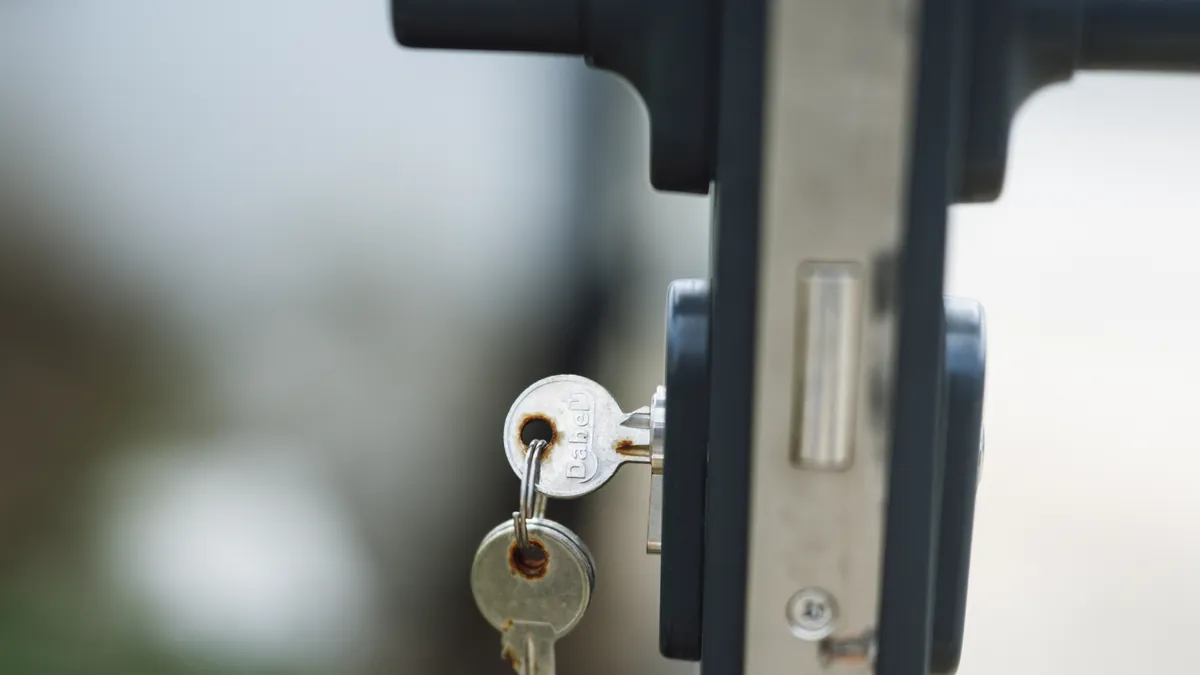
Featured image: “Key hanging from a door lock at an entrance near a building” by Shixart1985, via Wikimedia Commons, licensed under CC BY 2.0.