Tenants buzzing your cell to be let in, packages left on the stoop, a lobby door that no longer locks behind anyone. Those are the signs a NYC building’s intercom has failed, and the next question is always cost. A working intercom is not optional either, since New York’s Housing Maintenance Code requires landlords to keep a functioning intercom in residential buildings. Pricing one is rarely a flat number, though. System type, building size, wiring condition, and the choice between repair and replacement can all move the final figure.
Intercom Cost by System Type
System type shapes the per-unit price as much as building size does. Each tier below reflects 2026 NYC figures, installation included.
Audio Intercom
Audio systems handle voice and door release only, with no camera. Pricing runs $500 to $1,500 per unit, which suits smaller buildings and owners who want a working buzzer at the lowest cost. For a main entrance station serving multiple apartment units, audio hardware and installation can cost $1,000 to $3,000 per door.
Video Intercom
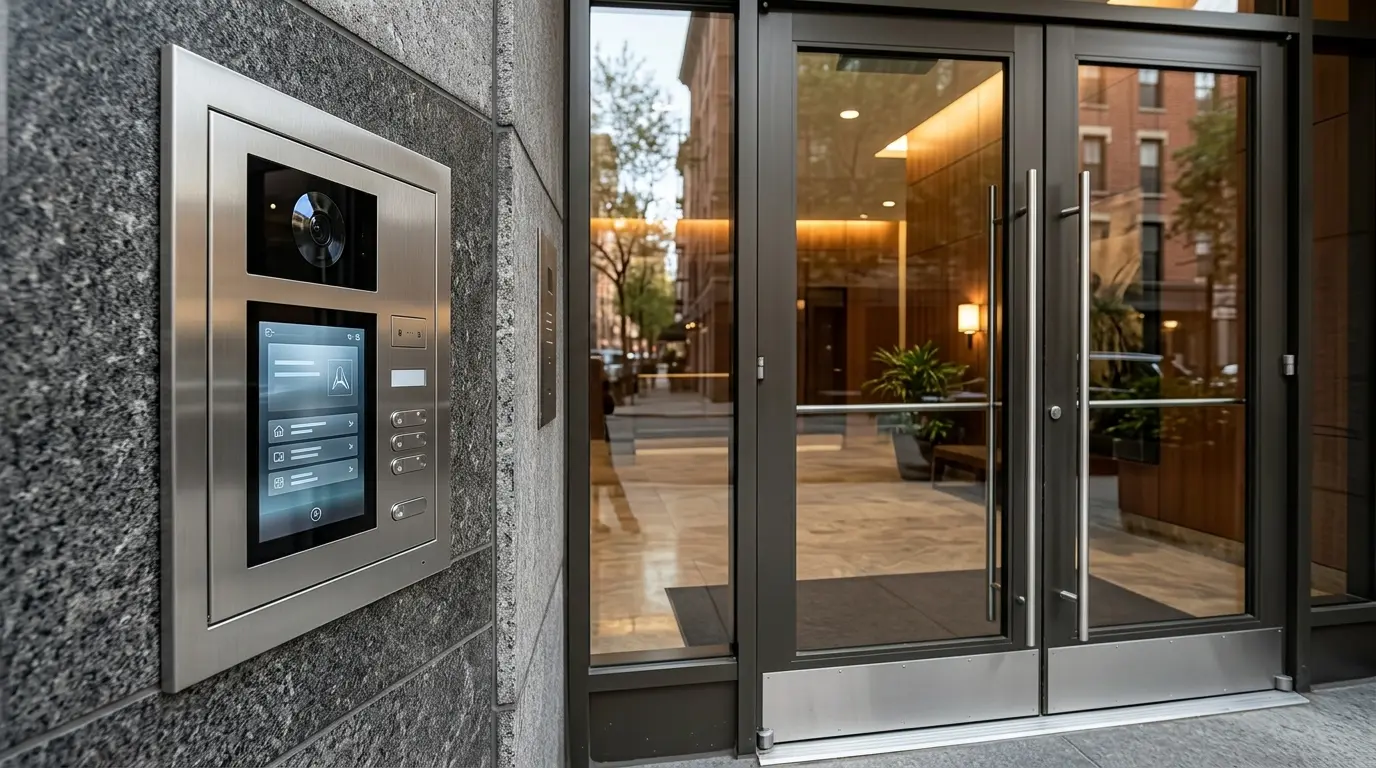
Video adds a camera at the entrance, letting residents see a visitor before releasing the door. Pricing runs $1,000 to $3,000 per unit, with HD video and remote unlock toward the top of that figure. Most NYC buildings now treat video as the default rather than a premium.
IP and Smart Intercom
IP systems run over the building network and usually pair with a smartphone app. Pricing reaches $1,500 to $5,000 or more per unit, and much of the spend moves to monthly software rather than a wired monitor in every apartment. Larger buildings and owners who want remote management tend to choose this route.
| System Type | Installed Cost Per Unit | Best Suited To |
|---|---|---|
| Audio | $500 to $1,500 | Smaller buildings, voice-only entry |
| Video | $1,000 to $3,000 | Buildings wanting to see visitors |
| IP / Smart | $1,500 to $5,000+ | Larger buildings, mobile access |
Intercom Cost by Building Size
Building size predicts the total spend better than any single component. Budgeting by the kind of property you run gives the clearest picture.
Small Walk-Up (2 to 6 Units)
Smaller buildings carry the lowest total, and a single entrance keeps the panel count down. Reusing the existing wiring, a one-door audio or video replacement usually comes to $2,000 to $6,000 all-in for hardware and installation.
Mid-Size Co-op or Condo (8 to 30 Units)
This range is where the per-unit cost starts to matter. Street panels cost $1,800 to $5,000 per entrance, and every in-unit station adds another $300 to $800 on top. Wiring 8 to 30 apartments this way pushes the total into five figures quickly, which is why many buildings this size move to a cloud system with a tenant app instead.
Large Multi-Tenant (30+ Units)
Larger buildings reach the top of the range, driven by multiple entrances, long cable runs, and the labor of working around occupied apartments. Per-unit pricing drops to its lowest here, since one controller serves many apartments, yet the total still runs well into five figures and climbs further in complex pre-war buildings.
The Cost Breakdown by Component
Every quote divides into parts, and knowing them shows where the money goes. These are the 2026 component ranges.
- Entry panel: Street station with camera, directory, and door release, roughly $1,800 to $5,000 per entrance.
- In-unit station: Wired monitor or handset, about $300 to $800 per apartment.
- Electric door release: Strike or maglock at the entrance, around $350 to $900.
- Wiring and cabling: Biggest variable, from $250 to $1,500 per unit on a retrofit.
- Tenant app: Replaces wired monitors on cloud systems, billed as monthly software.
Wiring separates NYC costs from the national figures, since pre-war walls and limited conduit slow every run and raise the labor bill. For a sense of that gap, HomeAdvisor puts the national average intercom install near $2,500, within a $1,200 to $8,500 range, and NYC projects usually land higher once local wages and permits apply.
Repair, Replace, or Upgrade: The Cost of Each Path
Within any building, the real decision is whether to repair, replace like for like, or upgrade to a modern system. This table sets the three paths against their 2026 NYC cost.
| Path | Typical 2026 Cost | When It Fits |
|---|---|---|
| Repair | $150 to $3,000 | One failed unit, panel, or door release |
| Like-for-like replacement | $2,000 to $6,000+ | Obsolete system, wiring still sound |
| Upgrade to video or app | $1,700 to $3,900 per entry, year one | Analog buzzer, repeated failures, remote access |
Repair Costs
Most faults need a part, not a new system. Expect to pay $150 to $300 for a diagnostic visit, then $250 to $600 to swap a single apartment unit like for like. Lobby panels that reuse the wiring cost more, around $1,500 to $3,500, while a door release comes to $350 to $900. Owners sometimes get quoted a full replacement when one station has died, the classic NYC overcharge, which is why a repair diagnosis should always come first.
Upgrade Costs
Owners moving off an analog buzzer weigh the long-term running cost, not just the install. Cloud-based video intercoms cost about $1,700 to $3,900 per entry point in the first year, with hardware, install, and software included, while simpler cellular buzzer upgrades come to $620 to $1,460. App-based systems remove the cable run to every unit, and they switch a tenant off the day they move out, which cuts the reprogramming calls a wired panel needs.
Ongoing and Hidden Costs
Install price is not the whole spend, especially on cloud systems. These recurring figures belong in any 2026 budget.
| Ongoing Cost | Typical 2026 Price |
|---|---|
| Cloud software, per entrance | $15 to $50 per month |
| Annual maintenance, per unit | $100 to $300 |
| Turnover reprogramming, wired panel | $500 to $1,000 per year |
| Repair service call | $200 to $500 each |
Cloud software adds up over time, and six entrances at $40 each per month come to $2,880 a year before any increase. One NYC installer puts the Manhattan-area install average at $720 to $1,584 per unit, a figure that climbs with building age and the number of wired stations.
What Drives Your Intercom Cost Up or Down
Two NYC buildings rarely pay the same, since the total depends on the property. These factors move the number most.
- Number of entrances and units: Largest multiplier on the total.
- System type: Audio at the low end, IP and video at the high end.
- Existing wiring: Reusable cabling lowers both labor and time.
- Wired monitors or a tenant app: App-based systems cut the per-unit install.
- Building age and access: Older, occupied buildings add labor hours.
- Integration: Linking to access control or cameras raises the price.
Reusing the current wiring is one of the clearest ways to keep a replacement affordable.
A Sample 2026 Budget for a NYC Building
Here is how the figures come together for a six-unit NYC building replacing a failed buzzer with a cloud video intercom, reusing the cabling at one entrance.
- One cloud video entry panel: about $3,000.
- Tenant smartphone app instead of wired monitors: included with the software.
- Installation at the single entrance: about $2,000.
- Cloud software for one entrance at $40 per month: about $480 per year.
- Optional wired in-unit stations at $400 each: about $2,400 if chosen.
That setup comes to roughly $5,000 upfront with about $480 per year in software. Choosing wired monitors in every unit raises the upfront figure, and an older building that needs new cabling raises the installation cost further.
How to Control Your Intercom Spend
Spending less does not mean a weaker system, and a few decisions keep the budget sensible without cutting the protection that matters.
- Repair before replacing: One failed unit is a few hundred dollars, not a rebuild.
- Reuse existing wiring: Keeping the cabling often turns a replacement into a one-day job.
- Choose a tenant app: Skipping wired monitors removes the per-unit cable cost.
- Match features to the building: Video where you need it, audio where that is enough.
- Get an on-site survey: An accurate quote needs the real entrance and unit count.
An installer who works on NYC buildings every week can point to where a repair will do and where a replacement is the better spend. Alto Locksmith & Security surveys buildings across all five boroughs and prices intercom work against the real wiring and entrances on site.
Frequently Asked Questions
Is a landlord required to fix a broken intercom in NYC?
Yes. NYC’s Housing Maintenance Code treats a working intercom as a required building service, and a broken one can draw an HPD violation once a tenant complains. In a co-op or condo, the board usually handles the lobby panel and shared wiring, while a proprietary lease can place a single unit’s repair on the shareholder.
How long does an intercom installation take in a NYC building?
A single-entrance replacement that reuses the wiring is often a one-day job. A full multi-entrance building with new cabling runs longer, sometimes a week or more, since each wired apartment adds a cable run and occupied units slow the work.
Can I keep my existing intercom wiring when upgrading?
Often yes, and reusing it is the biggest saving on the job. Many modern panels and cloud systems work over existing cabling, which avoids the per-unit rewire that drives up cost in older buildings. An on-site survey confirms whether the current wiring can stay.
Do tenants or the building pay for an intercom upgrade?
In a rental, the owner carries the cost as a building service. In a co-op or condo, a building-wide upgrade is usually a common-area expense handled by the board, though a proprietary lease or an alteration agreement can shift a specific repair.
Are wireless or cloud intercoms cheaper than wired systems in NYC?
Upfront, usually yes, since a tenant app removes the cable run to every apartment. The trade-off is a monthly software fee per entrance, so a wired system with no subscription can cost less across many years in a large building.
Final Thoughts
Intercom cost in NYC comes down to three things: the type you install, the size of your building, and whether you repair or replace. Audio systems tend to cost less, while IP and smart systems sit at the higher end, with video options falling between them. Wiring and the number of entrances then shape the labor needed for installation. Small walk-ups may stay within a few thousand dollars, while mid-size and larger buildings can reach five figures once multiple units and entrances are involved.
The final price comes from the building itself. Alto Locksmith & Security checks the entrances, wiring, and existing equipment across all five boroughs before recommending a repair, replacement, or upgrade. Need an intercom price for your building? Have Alto Locksmith & Security assess the system and quote the work based on its actual condition.