Coming home to a forced door or a broken window leaves most people unsure of what to do first. The next few hours matter for your safety, your police report, your insurance claim, and how quickly your home is secure again. Burglary has been falling across the city, but it still affects thousands of households, and the NYPD recorded 12,777 burglaries citywide in 2025.
Knowing what to do after a break-in in NYC comes down to a clear order. Get to safety and call 911, leave the scene untouched until police arrive, then document every loss and secure your door, locks, and windows the same day. After that, notify your landlord or building, file your insurance claim, and protect your accounts and identity. Handling each step in order keeps you safe and makes every later step easier.
Quick Home Break-In Checklist
A home break-in checklist helps you move through a stressful day without missing anything. This summary shows what to do and when:
| Timing | What to Do | Why It Matters |
|---|---|---|
| First minutes | Leave or stay outside and call 911 | The intruder may still be inside |
| Before police arrive | Touch nothing and wait nearby | Protects evidence for the investigation |
| With police | Get the complaint number and precinct | Needed for your report copy and insurance |
| First few hours | Photograph damage and list what is missing | Supports your police report and claim |
| Same day | Secure doors, locks, and windows | Stops a repeat entry the same night |
| Same day | Notify your landlord or building | Owners must keep doors and locks working |
| Within a day or two | Start your insurance claim | Most insurers require prompt notice |
| Within a day or two | Freeze credit and cancel stolen cards | Stops identity theft and fraud charges |
| Within a week | Upgrade weak points and book an NYPD survey | Makes a second break-in harder |
What to Do If Someone Broke Into Your Apartment in NYC
Each step below builds on the one before it. Following them in order protects your safety first and your paperwork second.
Step 1: Get to Safety and Call 911
Your first concern is whether someone is still inside. These actions keep you out of danger until police arrive:
- Do Not Go In: If you see a forced door, broken glass, or a door left open, stay outside and walk to a safe spot.
- Leave Quietly If You Are Already Inside: Get out without checking rooms or gathering belongings.
- Call 911 From a Safe Place: A neighbor’s apartment, the lobby, or the street outside are all better than your own hallway.
- Wait for Officers: Police will clear the apartment before you go back inside.
Step 2: Leave the Scene Untouched for Police
Evidence is easy to destroy by accident, especially in the first hour. Try to leave everything as you found it, and keep these points in mind:
- Avoid Touching Surfaces: Door handles, drawers, and windows may hold prints or other evidence.
- Hold Off on Cleanup: Broken glass and open drawers should stay put until police and your insurer have a record of them.
- Tell Officers What You Touched: If you opened a door or picked something up before realizing what happened, let them know.
Step 3: Get Your NYPD Report Details
Your insurer, landlord, and bank may all ask for proof that you reported the crime. Before officers leave, ask for the complaint number and the precinct that took the report. The NYPD provides a Verification of a Complaint Report free of charge, and you can request it online or by mail. That verification is a brief summary, and the full report requires a separate Freedom of Information Law request.
Step 4: Document Every Loss and All Damage
A detailed record speeds up both the police follow-up and your insurance claim. Once police clear the apartment, work through these tasks:
- Photograph Everything: Capture the entry point, damaged locks, broken windows, and every disturbed room before cleaning up.
- List What Is Missing: Include a description, brand, model, serial number, and rough value for each item.
- Gather Proof of Ownership: Receipts, bank statements, product photos, and warranty cards all help support a claim.
- Check Less Obvious Spots: Look for missing spare keys, mail, checkbooks, passports, and documents with your personal details.
- Note Damage to the Door and Frame: A split frame or bent strike plate is easy to miss and matters when choosing repairs.
Step 5: Secure Your Home After the Burglary
A forced door or broken window leaves your home open for a repeat entry the same night. Securing every entry point is the most urgent practical step once police have finished.
How to Secure a Door After a Break-In in NYC
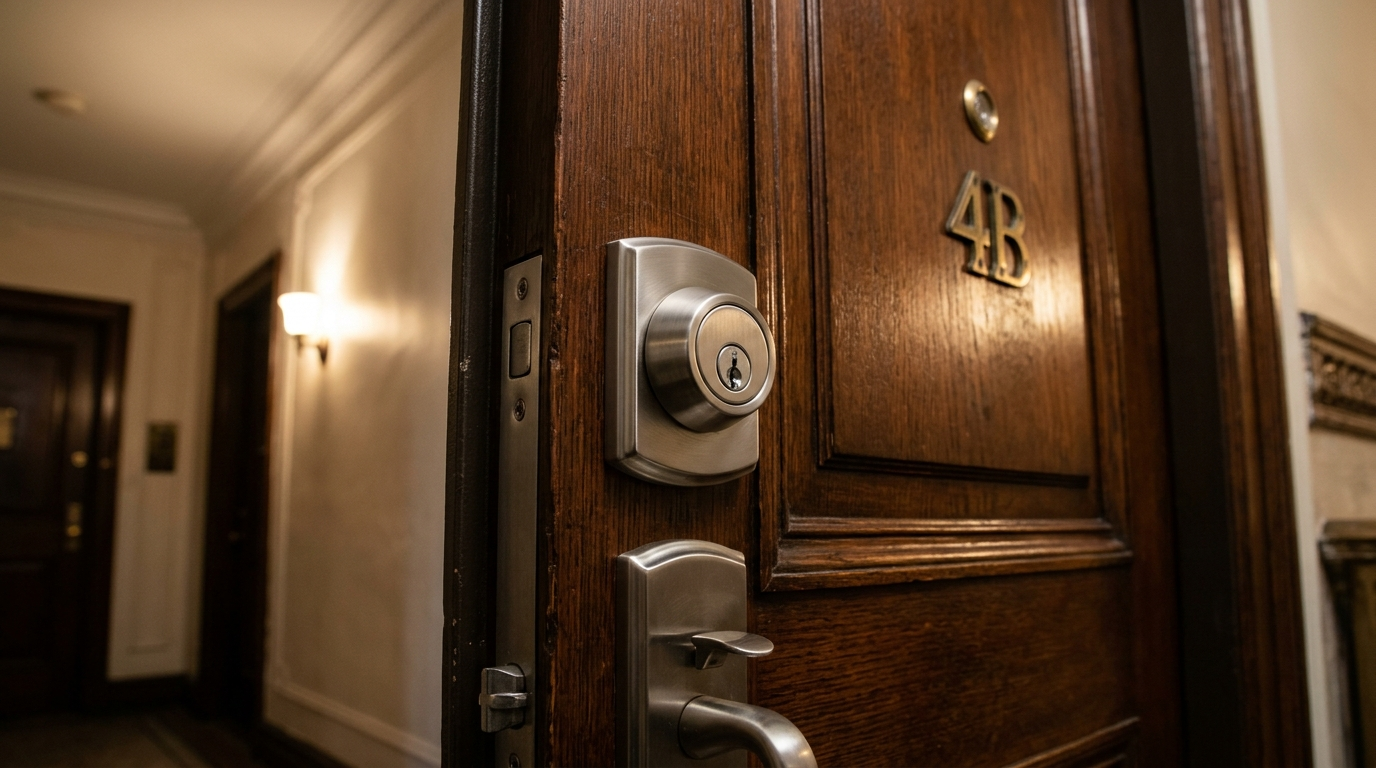
Securing a damaged door starts with checking what the burglar broke. Look over these parts of the door carefully:
- The Lock Cylinder: A cylinder that was drilled, pulled, or bent needs replacing, since it can no longer be trusted to hold.
- The Deadbolt and Latch: A bolt that no longer extends fully or catches the strike needs new hardware.
- The Strike Plate and Frame: Split wood or a torn strike plate means the lock has nothing solid to hold onto, even if the lock itself survived.
- The Door Itself: A cracked or warped door may need repair before any new lock will work properly.
When the frame or door is badly damaged, a locksmith can make the opening secure the same day while larger repairs are scheduled. In a rental, send photos of the damage to your landlord right away, since the owner is usually responsible for the door and the lock it supplied.
Emergency Lock Replacement After Burglary in NYC
Waiting until morning is rarely a good idea when the lock is damaged or your keys were taken. An emergency lock replacement usually follows a simple order, and knowing it helps you plan the rest of the night:
- Secure the Opening: The technician gets the door closing and locking again, even if the frame needs more work later.
- Replace Damaged Hardware: A forced cylinder, bent deadbolt, or torn strike plate is swapped for new parts.
- Cancel Missing Keys: Every lock that a stolen key could open is rekeyed or replaced on the same visit.
- Keep the Records: Ask for an itemized receipt, since your insurer or landlord may need it for the claim or repair.
Alto Locksmith & Security handles emergency lock repair by securing the opening first and then fitting a stronger lock, with the same rate at any hour.
Windows and Fire Escapes
Many NYC break-ins come through a window, especially on low floors and fire escapes. If you plan to add bars or a gate, the rules matter. The FDNY states that only FDNY-approved security gates that open without a key may be installed on a fire escape window, and approved gates are stamped or labeled with an FDNY approval number. Replace broken glass quickly and make sure every window lock still works before the first night back.
Codes and Digital Access
Physical locks are only part of the picture. Reset anything a burglar could have seen, copied, or taken with these steps:
- Smart Lock Codes: Change every user code and remove any guest access you no longer need.
- Alarm Codes: Update the alarm code and check that the system recorded the break-in.
- Building Fobs and Keys: Report stolen building fobs or keys to management to have them deactivated or replaced.
- Garage and Storage Access: Reset any codes or remotes that were stored inside the home.
Step 6: Notify Your Landlord or Building
Renters should tell the landlord or management company the same day, in writing if possible. Rental building owners must keep apartments in livable condition and make needed repairs, including doors and locks that are broken or missing, which makes a damaged lock or door the owner’s responsibility to repair in most cases. If repairs stall, you can file an apartment maintenance complaint through 311. Tenants in most apartment buildings can also add a lock of their own, as long as the landlord receives a copy of the key on request.
Step 7: File Your Insurance Claim
Homeowners and renters insurance often covers stolen property and break-in damage, depending on your policy. Filing a police report comes first, since most insurers require one before they process a theft claim. Gather these items before you call your insurer:
- Police Complaint Number: Include the precinct and the date of the report.
- Photos and Video: Share images of the damage and the disturbed rooms.
- Inventory of Stolen Items: List each item with its value and any serial numbers.
- Receipts for Emergency Repairs: Keep every receipt for locks, glass, and door work, since your policy may reimburse them.
Step 8: Protect Your Identity and Accounts
Wallets, mail, laptops, and documents can expose far more than their dollar value. If anything with your personal details was taken, work through this list right away:
- Cancel Stolen Cards: Call your bank and card issuers to freeze or close affected accounts.
- Freeze Your Credit: The FTC notes that a credit freeze is free to place and to lift, and it stops anyone from opening new credit in your name.
- Place a Fraud Alert: A fraud alert, which is also free, asks lenders to verify your identity before opening new credit in your name.
- Change Passwords: Update logins for email, banking, and any accounts saved on a stolen device.
- Replace ID Documents: Report a stolen driver’s license or passport to the issuing agency and apply for a replacement.
Step 9: Ask About Victim Compensation
Some costs are not covered by insurance, and New York State can help eligible crime victims with part of them. The Office of Victim Services may reimburse eligible victims for out-of-pocket costs such as home security devices and installation, and personal property important to health, safety, and welfare. OVS-funded Victim Assistance Programs can help you check eligibility and complete an application, and they also offer counseling, which many people find useful after the stress of a break-in.
Should You Change Your Locks After a Break-In?
In most cases, yes. Changing locks after a break-in is the safest choice whenever the lock was damaged, your keys were taken, or you are unsure how the burglar got in. Whether you need a rekey or a full replacement depends on what happened:
| What Happened | Lock Condition | Best Next Step |
|---|---|---|
| Door was forced or kicked | Damaged or loose | Replace the lock and repair the frame |
| Lock was picked or bypassed | Working but weak | Replace with a higher-grade or high-security lock |
| Keys were stolen | Undamaged | Rekey or replace every lock those keys open |
| Entry was through a window | Undamaged, keys safe | Secure the window first, then rekey if any keys are missing |
| Entry method is unclear | Appears fine | Rekey to rule out a copied or stolen key |
Rekeying cancels old keys, while lock replacement restores strength and can raise it. After a forced entry, replacement is almost always the better choice, since a rekey leaves the damaged or weak hardware in place.
How to Prevent Another Break-In
Homes that were entered once can be targeted again if the same weak point remains. These upgrades address the most common ways burglars get in:
- Stronger Deadbolts: ANSI/BHMA Grade 1 deadbolts pass tougher strength and durability tests than Grade 2 or Grade 3 models, which makes them harder to force.
- Longer Strike Plate Screws: On wood frames in houses and brownstones, longer screws that reach the framing studs hold a strike plate far better than the short screws most locks ship with.
- Restricted Keys: High-security locks use restricted keys that only an authorized dealer can copy, and only with the owner’s approval.
- Safer Building Habits: Buzz visitors into the building only when you know who they are, and report broken lobby doors or intercoms to management.
- A Free NYPD Security Survey: Precinct crime prevention officers offer free security surveys for houses and apartments, checking locks, doors, lighting, windows, and alarms.
Alto Locksmith & Security installs ANSI-grade deadbolts and high-security locks from Medeco and Mul-T-Lock, which pair well with the recommendations from an NYPD survey.
If the Break-In Happened at Your Business
Stores and offices follow the same first steps, with a few extra concerns around staff, stock, and opening on time. Business owners should also cover these points:
- Save Camera Footage: Export video from the night of the break-in before the system records over it.
- Rekey After Missing Keys: Any key that may have been copied or taken should stop working the same day.
- Secure the Storefront: Damaged storefront cylinders, rolling gates, and exit hardware need repair before the next closing.
- Review Who Holds Access: A commercial locksmith can set up a master key system or access control, where a lost card can be shut off without changing the lock.
Get Your Home Secure Again in NYC
A break-in is unsettling, but a clear plan makes the next few days easier to manage. Staying safe, reporting the crime, documenting losses, and securing every entry point in that order protects both your home and your claim.
Alto Locksmith & Security helps New Yorkers restore security after a break-in at any hour. Its licensed and insured technicians secure forced doors, replace damaged cylinders and deadbolts, and rekey locks when keys have gone missing, often on the same visit. For homes that need more protection, the team installs ANSI-grade deadbolts, high-security locks with restricted keys, and smart locks sized to your door and building rules. Businesses can get storefront lock repair, rekeys after a break-in, master key systems, and access control from the same team. Every job starts with one price confirmed before any tool comes out, and the rate stays the same at night, on weekends, and on holidays.
Need Emergency Locksmith Help in NYC?
Get your door secured and restore your home’s protection with Alto Locksmith & Security.
Call: (917) 525-3926
Frequently Asked Questions
Should I change my locks after a break-in?
Yes, in most cases. Replace the lock if it was forced or damaged, and rekey or replace it if keys were stolen or you are unsure how the burglar got in.
How soon should I change my locks after a break-in?
The same day, if possible. A damaged lock or stolen key leaves your home open to a second entry, often within hours.
Does my landlord have to fix my door after a break-in?
In most NYC rentals, yes. The owner must keep apartment doors and locks in working order, and you can file a 311 complaint if repairs are not made.
Do I need a police report for an insurance claim?
Yes, most insurers require a police report, and you will need the complaint number and precinct when you file.
How do I get a copy of my NYPD report?
Request a free Verification of a Complaint Report online or by mail using your complaint number and precinct. The full report requires a Freedom of Information Law request.
Is rekeying enough after a break-in?
Rekeying is enough only when the lock is undamaged, and the concern is stolen or copied keys. A forced or picked lock should be replaced with stronger hardware.
Can I get help paying for new locks after a break-in?
Possibly. New York’s Office of Victim Services may reimburse eligible victims for home security devices and installation not covered by insurance, and your insurer may also cover emergency repairs.