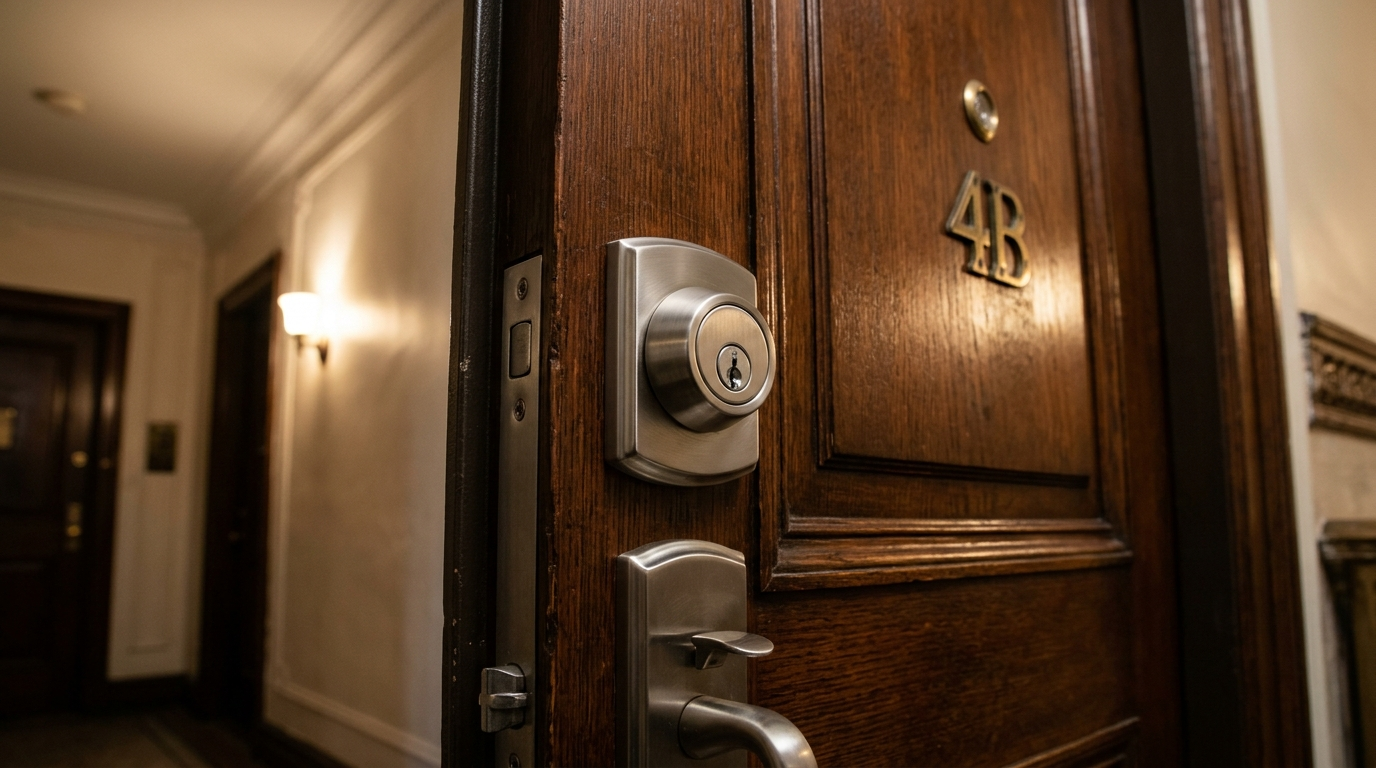
Changing an apartment lock in NYC could lead to a $10,000 civil penalty if it amounts to an intentional illegal eviction.
Changing apartment locks of NYC involves legal responsibilities for both landlords and tenants. Property owners must provide working locks, while tenants have specific rights to install additional security hardware. Disputes can arise when someone replaces a lock without sharing the required key or uses a lock change to prevent an occupant from entering. Depending on the circumstances, unlawful conduct can result in Housing Court proceedings, financial penalties, or criminal charges.
NYC laws explain when tenants can install additional apartment locks, what security hardware landlords must provide, and when changing a lock becomes an illegal lockout. These rights and responsibilities are outlined in the New York Attorney General’s Residential Tenants’ Rights Guide. Knowing these rules before arranging apartment lock replacement in Manhattan can help tenants and property owners avoid legal problems.
Are Landlords Legally Allowed to Change Apartment Locks in NYC?
Yes, NYC landlords may replace or rekey apartment locks for legitimate maintenance and security reasons. NYC Administrative Code § 27-2043 requires owners to provide certain entrance-door locks, while § 26-521 prohibits using lock changes to unlawfully exclude protected occupants. Even after replacing defective hardware, landlords must maintain the tenant’s authorized access.
Routine lock changes should follow applicable access requirements, and tenants must receive working replacement keys when the existing locks are changed. Emergency repairs may require immediate attention, but they do not cancel an occupant’s legal protections. Owners who use lock changes to deny access can face unlawful-eviction proceedings and penalties under NYC law.
Can NYC Tenants Change Their Apartment Locks Without Landlord Permission?
Yes, New York Multiple Dwelling Law § 51-c allows qualifying tenants to install an additional entrance-door lock without prior landlord permission. However, the statute protects adding a separate lock rather than automatically authorizing replacement of the owner’s existing hardware.
New York Multiple Dwelling Law § 51-c establishes these conditions:
- Additional lock: Tenants may install a lock separate from the landlord-provided lock.
- Size restriction: The additional lock cannot exceed three inches in circumference.
- Duplicate key: Tenants must provide the landlord or their agent with a key upon request.
- Extra charges: Landlords cannot charge additional rent or a fee merely for exercising this statutory right.
Certain housing categories, including municipal housing authority properties, are excluded from this provision. Tenants replacing existing locks should review their lease and applicable building requirements because those changes are not automatically covered by the additional-lock right.
What Locks Must NYC Landlords Provide and Maintain?
NYC Administrative Code § 27-2043 requires owners to provide specified entrance-door locking hardware. Additional requirements apply to Class A multiple dwellings, which generally include residential apartment buildings.
| Required hardware | Legal requirement |
| Entrance-door key lock | Every dwelling unit must have a key-operated lock and at least one key. |
| Heavy-duty latch | Required on Class A multiple-dwelling apartment entrance doors. |
| Heavy-duty deadbolt | Must operate by key from outside and thumb-turn from inside in Class A multiple dwellings. |
| Chain-door guard | Must allow partial opening of the entrance door in Class A multiple dwellings. |
Landlords must maintain required hardware in working condition. Broken deadbolts, defective cylinders, and other lock failures may result in HPD enforcement when owners neglect their maintenance obligations. Alto Locksmith & Security Manhattan provides residential lock repair and replacement services for apartment owners addressing defective hardware.
When Is Changing an Apartment Lock Considered an Illegal Lockout?
Changing locks can become an illegal lockout when a protected occupant is prevented from entering without lawful authority. Under NYC Administrative Code § 26-521, unlawful eviction includes certain lock changes that deny entry without supplying a key. Protections extend to tenants and other qualifying occupants, including people who have lawfully occupied a dwelling for at least 30 consecutive days.
Unpaid rent, lease expiration, and disagreements with tenants do not independently authorize landlords to exclude occupants. Owners generally must obtain the required court authority and follow the lawful eviction process rather than using lock replacement to recover possession.
Penalties for intentional unlawful eviction
| Violation | Possible legal consequence |
| Intentional unlawful eviction | Class A misdemeanor |
| Civil penalty | $1,000–$10,000 per violation |
| Failure to restore occupancy after a qualifying request | Additional civil penalty of up to $100 per day, for no longer than six months |
| Separate intentional violations | Each may constitute a separate offense |
Criminal misdemeanor penalties can also include imprisonment under applicable New York law, depending on the court’s decision. NYC Administrative Code § 26-523 establishes these penalties for unlawful eviction conduct, not for every ordinary disagreement about locks or duplicate keys.
What Should a Tenant Do If a Landlord Changes the Locks Illegally?
Tenants who discover that their landlord changed the locks without providing access should document the situation immediately. NYC Housing Court allows qualifying occupants to request restoration of possession when an illegal lockout occurs.
- Document the lockout: Photograph the changed locks and preserve messages showing that access was refused.
- Contact the police: Report the suspected illegal lockout and explain your lawful occupancy.
- Collect occupancy evidence: Gather your lease, rent receipts, utility bills, identification, or mail showing the apartment address.
- Seek Housing Court assistance: File an illegal lockout proceeding when access is not restored and request the appropriate relief.
Housing Court may order restoration of possession when the legal requirements are met, and qualifying tenants may also pursue applicable damages. NYC’s official Illegal Lock-Outs guidance explains how tenants can seek court assistance and request restoration of possession. Rather than forcing entry or damaging the door, tenants should use police assistance, Housing Court, or legal services to address the unlawful exclusion.
What Should a Landlord Do If a Tenant Changes the Locks Without Permission?
Landlords should first determine whether the tenant installed an additional lock or replaced the existing entrance hardware. Multiple Dwelling Law § 51-c protects qualifying additional-lock installations, although tenants must supply a duplicate key upon request. Replacing landlord-provided hardware may involve different lease restrictions and building requirements.
Owners should communicate their concerns in writing, request any legally required key, and review whether the installation affects required security hardware or lawful access. Disagreements must be resolved through appropriate legal procedures rather than changing the locks again to exclude the tenant. Alto Locksmith & Security provides lock inspections, rekeying, and replacement services for authorized apartment security work.
Who Is Responsible for Paying for Lock Changes in NYC Rentals?
Who pays for an apartment lock change in NYC depends on why the lock needs replacing. Landlords generally cover repairs caused by normal wear, while tenants may have to pay for lost keys, damage they caused, or optional security upgrades.
| Lock-change situation | General responsibility |
| Required lock fails through normal wear | Landlord |
| Tenant installs an additional lock | Tenant |
| Tenant loses apartment keys | Depends on lawful lease terms and circumstances |
| Tenant requests an optional security upgrade | Usually tenant, subject to agreement |
| Existing lock is damaged through tenant misuse | Tenant may be responsible |
| Owner changes locks after lawful tenant turnover | Generally owner |
Required maintenance obligations cannot automatically be transferred to tenants through an unenforceable lease provision. Owners can also consider professional lock rekeying instead of replacing the entire lock. Rekeying is often more affordable when the existing hardware is in good condition.
What Are the Lock-Change Rules for NYC Rent-Stabilized Apartments?
Rent-stabilized apartments remain subject to NYC’s required lock standards and unlawful-eviction protections. Landlords must maintain functioning entrance-door hardware, while qualifying tenants retain the additional-lock rights provided under Multiple Dwelling Law § 51-c. Rent stabilization also allows tenants to pursue specific remedies when required apartment services are not maintained.
New York State Homes and Community Renewal (HCR) identifies broken door locks as a possible reduction in required services. Tenants may file Form RA-81 with the Division of Housing and Community Renewal (DHCR) when an owner fails to restore a required apartment service.
| Lock-related problem | Potential remedy or consequence |
| Required door lock remains defective | Tenant may file a DHCR individual-apartment service complaint. |
| DHCR confirms a qualifying service reduction | Agency may order a rent reduction. |
| Owner fails to restore the required service | Rent reduction and applicable rent-increase restrictions may continue. |
| Landlord unlawfully excludes a protected tenant | Separate unlawful-eviction penalties may apply. |
HCR generally requires landlords to restore the service before obtaining an order that restores the regulated rent. Tenants should document repair requests, while owners should address required lock defects promptly to avoid prolonged service disputes and possible rent consequences.
Can Landlords Change Locks After a Tenant Moves Out?
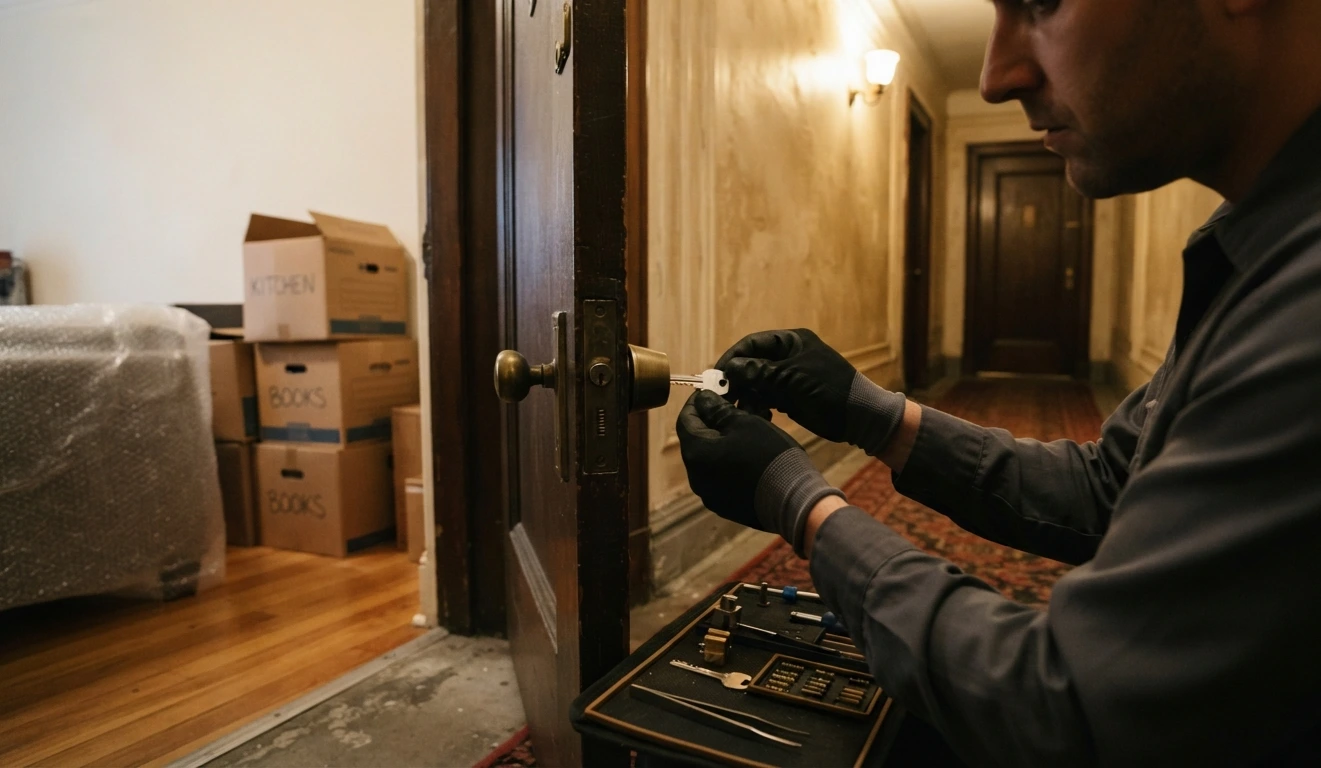
Yes, landlords can generally rekey or replace apartment locks after the tenant has voluntarily surrendered possession or the owner has lawfully recovered the unit. Rekeying prevents previously issued keys from operating the existing lock, while complete replacement may be appropriate when the hardware is defective or damaged.
However, lease expiration, unpaid rent, or suspected abandonment does not automatically authorize an owner to exclude a protected occupant. Owners should confirm lawful possession before changing locks to prevent reentry, especially when the tenant’s departure is disputed. Alto Locksmith & Security Manhattan provides apartment rekeying and replacement services following lawful tenant turnover.
Frequently Asked Questions
Does a Tenant Have to Give the Landlord a Key to a New Lock?
Yes, New York Multiple Dwelling Law § 51-c requires qualifying tenants to provide a duplicate key upon request when they install an additional apartment lock. Tenants should give the landlord a working copy and keep a record of when it was delivered. Refusing the request can create a tenancy dispute that may require legal resolution.
Can a Landlord Change Apartment Locks Without Prior Notice?
Sometimes, emergency repairs may justify immediate lock changes, while routine work must follow applicable notice and access requirements. Landlords should inform tenants about planned replacement work and arrange access when necessary. Under NYC Administrative Code § 26-521, changing locks to exclude a protected occupant without providing a key can constitute unlawful eviction.
Can a Landlord Change Locks If the Tenant Has Not Paid Rent?
No, unpaid rent does not authorize landlords to change locks and exclude protected tenants. NYC Administrative Code § 26-521 requires landlords to use lawful procedures rather than removing occupants through unauthorized lock changes. Tenants who are locked out should preserve proof of occupancy, contact the police, and seek Housing Court assistance.
Can NYC Tenants Install Smart Locks in Rental Apartments?
Yes, smart locks may be permitted when they comply with applicable lease, building, and entrance-door safety requirements. Tenants should request written approval before replacing landlord-provided hardware. New York Multiple Dwelling Law § 51-c protects certain additional-lock installations, but it does not automatically authorize replacing an existing lock with a smart lock.
Are Landlords Required to Change Locks Between Tenants?
No, NYC Administrative Code § 27-2043 requires landlords to provide specified functioning apartment entrance-door locks and keys, but it does not establish a universal rekeying requirement after every tenancy. Owners should consider rekeying after lawful tenant turnover because former occupants may still possess copies of previously issued keys.
Can a Landlord Enter an Apartment After the Locks Have Been Changed?
Yes, landlords may enter for lawful purposes such as necessary repairs, inspections, or emergencies, subject to applicable access requirements. NYC HPD’s Tenant Rights and Responsibilities guidance explains tenant access obligations and landlord entry rights. Possessing a duplicate key does not give an owner unrestricted permission to enter whenever they choose.
Get Professional Apartment Lock Changes in Manhattan
NYC landlord lock-change laws establish responsibilities for maintaining apartment security and protecting lawful access. Improper lock changes can lead to HPD enforcement, DHCR service-related remedies, or unlawful-eviction penalties, depending on the circumstances. Tenants and landlords should confirm their legal rights before replacing entrance hardware or restricting access.
Alto Locksmith & Security Manhattan provides residential lock replacement, rekeying, deadbolt installation, and lock repair services for tenants, landlords, and property managers. Our mobile locksmiths handle authorized apartment lock changes and help customers select appropriate hardware for their doors. Need to repair, rekey, or replace an apartment lock? Contact Alto Locksmith & Security Manhattan to discuss your requirements and request a professional quote.