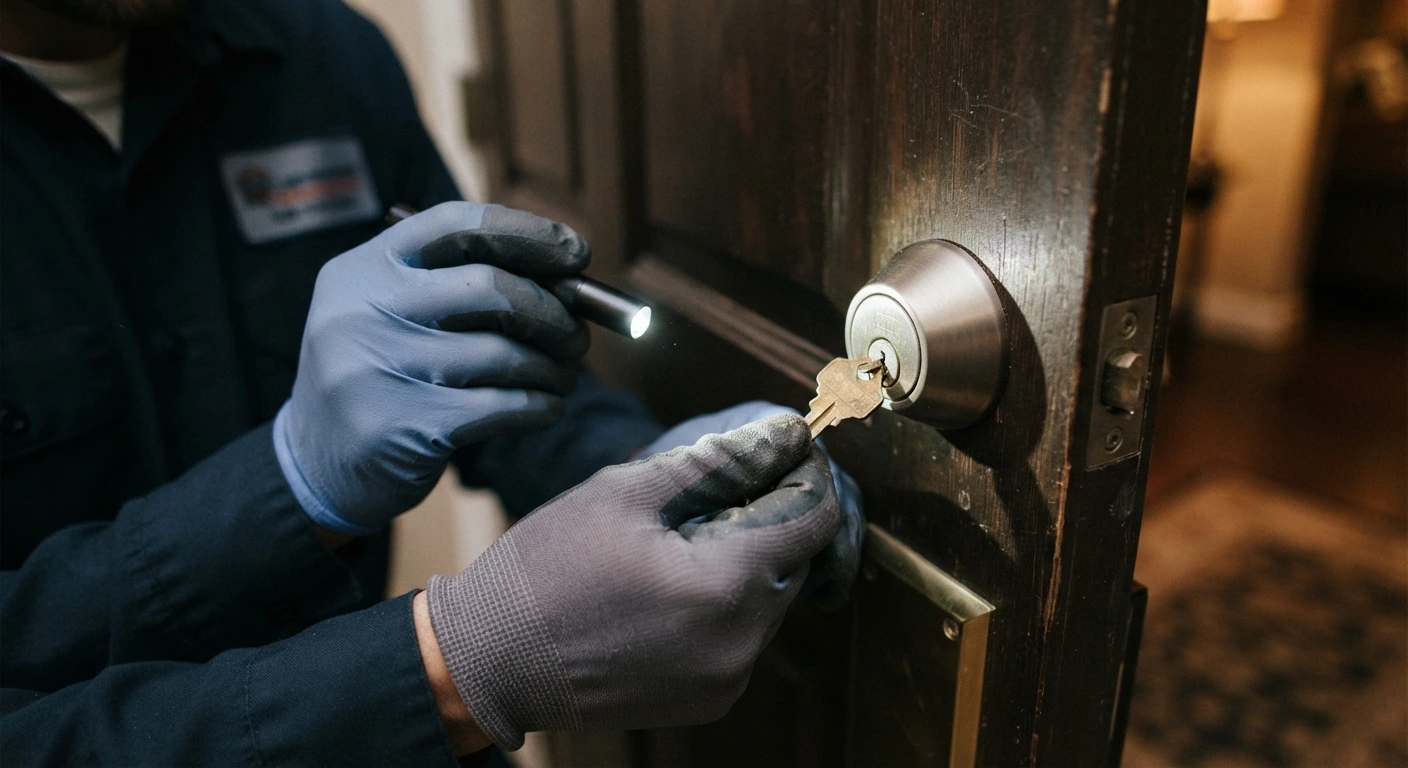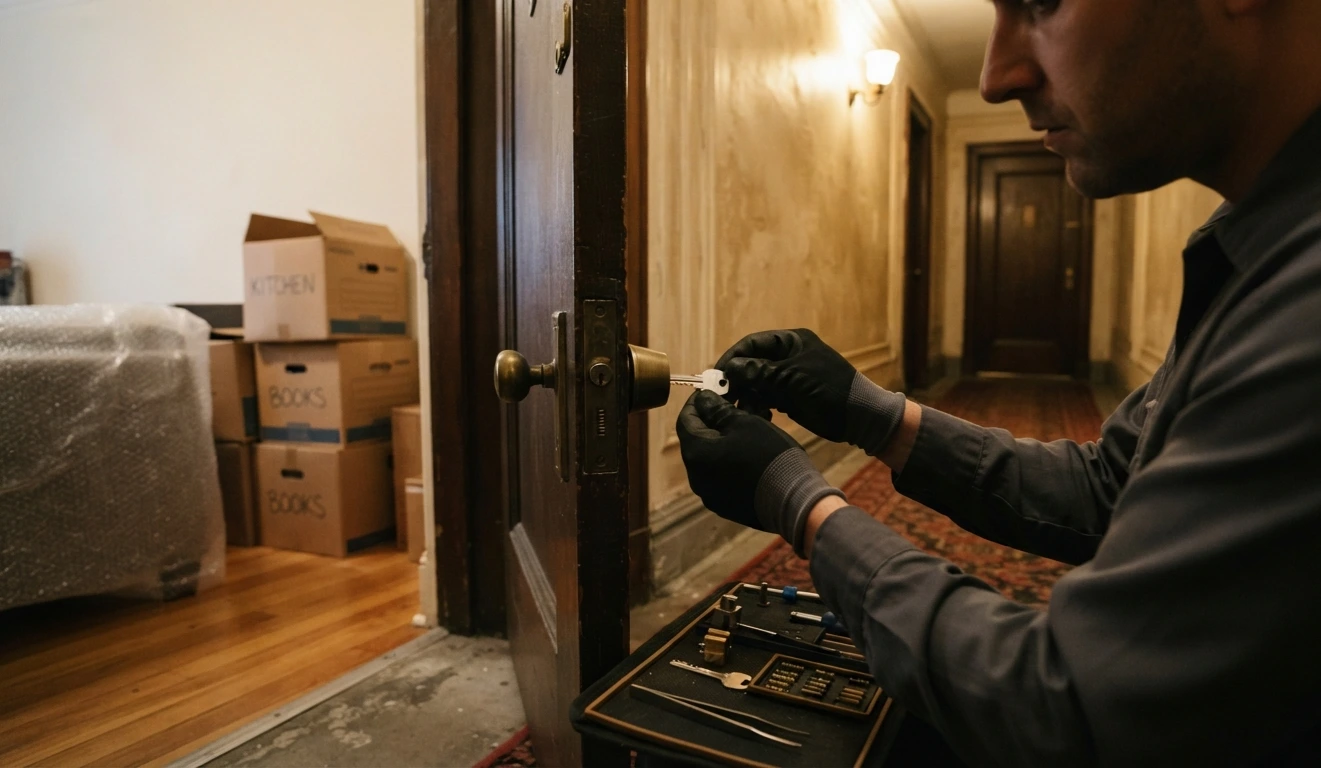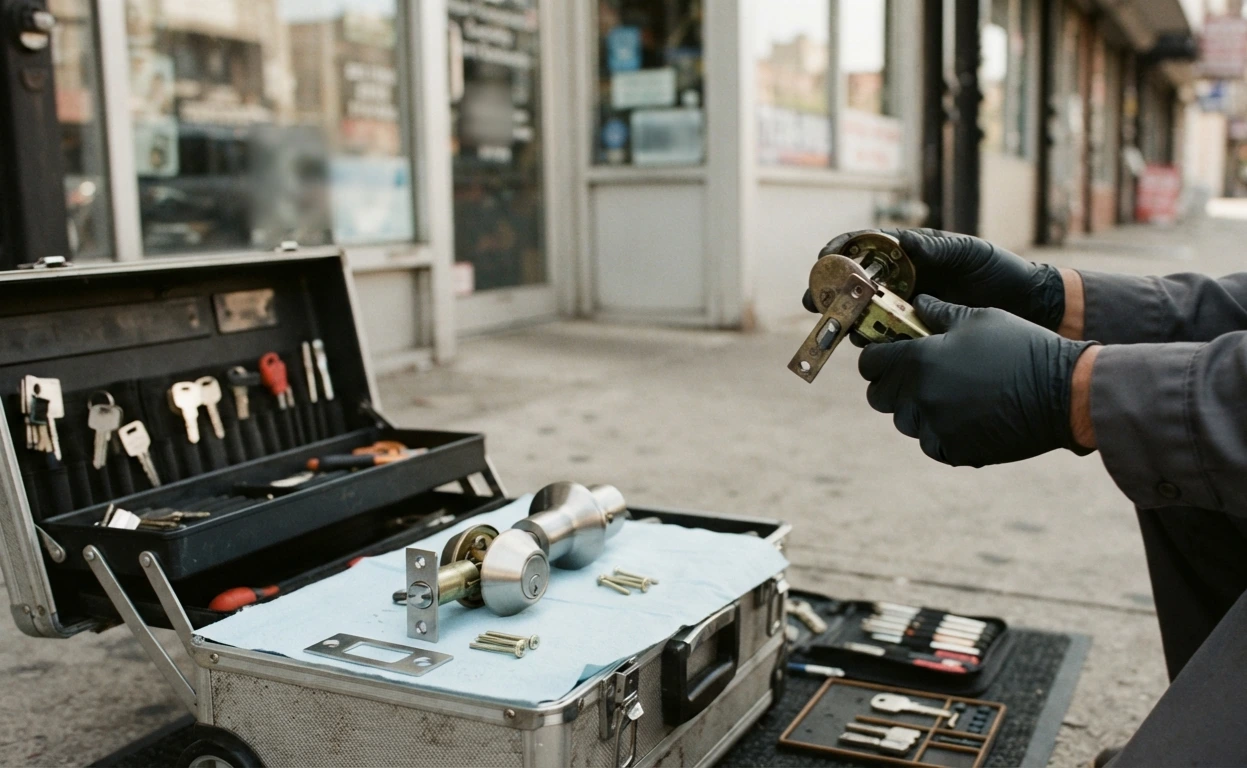
A lockout puts you under pressure. You may be standing outside an apartment late at night, unable to open a storefront before business hours, or stuck beside a car with the keys inside. That urgency can make the first locksmith ad on your phone look like the fastest answer.
It can also make you an easier target for locksmith scams that NYC residents and business owners should know about. A dishonest operator may advertise a low starting price, change the amount after arriving, damage a lock that could have been opened another way, or avoid telling you which company is responsible for the work.
Before hiring a locksmith in NYC, take a few minutes to verify who is coming, what the work is expected to cost, and what happens if the scope changes. Those checks matter even more during an emergency.
Why Locksmith Scams in NYC Work So Well During an Emergency
Locksmith scams often depend on urgency rather than a complicated trick.
A customer who is locked out wants the door open. A restaurant owner may have employees waiting outside. An office manager may need access before clients arrive. A tenant may be standing in a hallway after midnight.
The pressure changes how people make decisions.
You may skip checking the company name because you need help now. You may accept a vague price because the dispatcher says the technician will explain it later. Once someone arrives and starts taking the lock apart, refusing an unexpected charge becomes harder.
This is why the best protection begins before any tool touches the door.
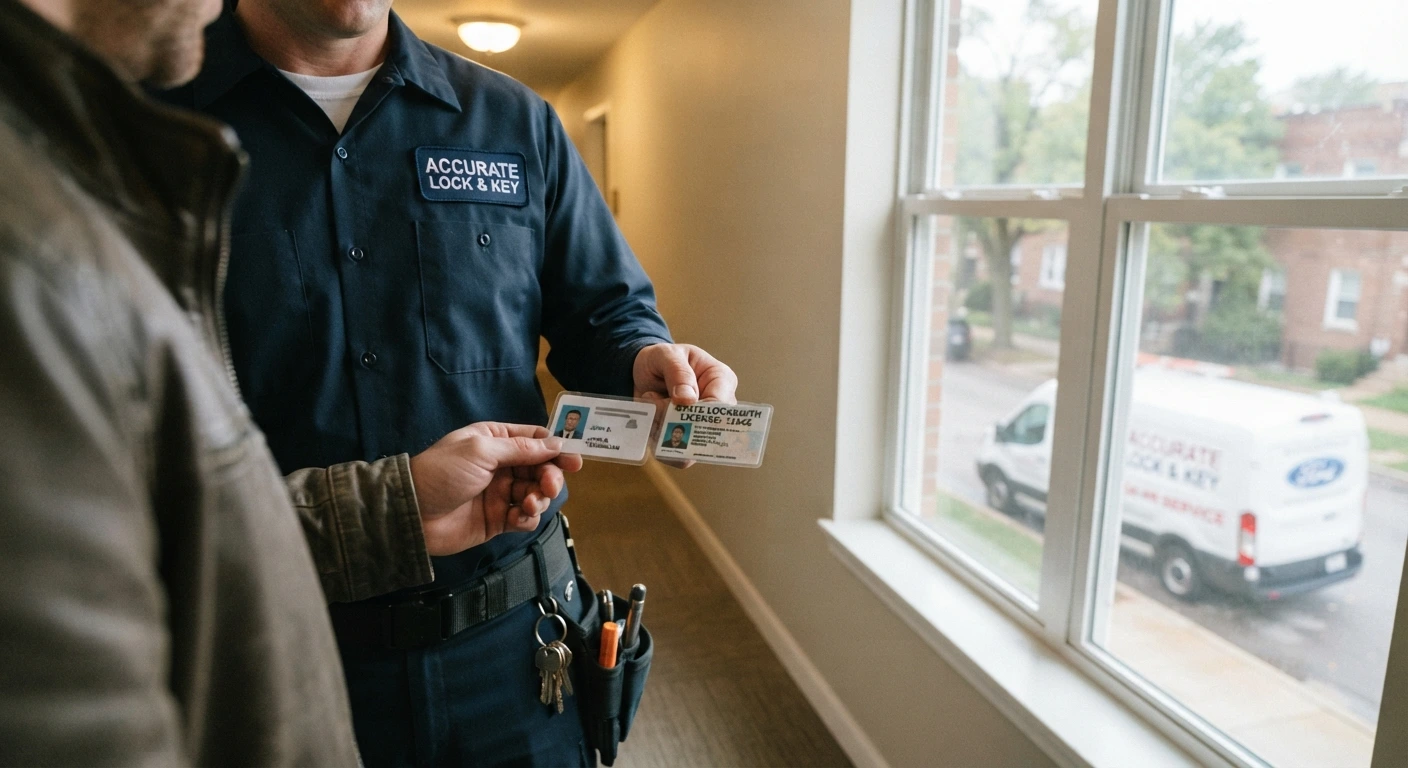
New York City also gives consumers one useful verification tool. Locksmiths who repair, service, install, inspect, or open and close locks by mechanical means must hold a locksmith license issued by the Department of Consumer and Worker Protection. You can use the city’s DCWP license search to check whether a business or individual holds a current license.
Licensing does not tell you the price of a job, but it gives you a basic fact to verify before allowing a stranger to work on the security of your home or business.
1. An Unclear Low Locksmith Quote Can Turn Into Bait-and-Switch Pricing
One of the first locksmith scam clues appears during the initial call.
The dispatcher gives an attractive starting number but refuses to explain what it covers. You may hear that the price is only for arrival, that labor will be determined later, or that the technician cannot discuss the total until reaching the property.
Some jobs cannot receive an exact price before the locksmith sees the lock. A damaged mortise lock, high-security cylinder, broken key, or failed electronic lock can require an inspection.
That does not mean the pricing conversation should be meaningless.
Before booking an emergency locksmith, ask what the quoted amount includes. Find out whether there is a service-call charge, labor charge, after-hours charge, drilling charge, and hardware cost if replacement becomes necessary.
Ask what conditions could change the estimate.
A company that cannot give one exact total should still be able to explain how the price will be determined.
The concern grows when the amount advertised online sounds low, but nobody will confirm it in writing or explain the possible additional charges.
2. A NYC Locksmith Who Will Not Give License Information Needs More Checking
A locksmith works directly on the hardware controlling access to your property. Asking who the person works for is reasonable.
NYC requires locksmith licensing through DCWP. The city also provides an online search where consumers can check license status without creating an account.
Before a technician arrives, ask for the business name and licensing information.
Then compare the details.
The name given on the phone should make sense with the business you found online. The technician should be able to identify the company responsible for the job. The paperwork or receipt should not suddenly introduce a business name you have never heard before.
A refusal to provide basic identification is different from a dispatcher simply needing a moment to find a license number.
You are giving someone access to an apartment, storefront, office, safe, or vehicle. You have a reason to know who is doing the work.
3. A Different Company Arriving at Your Door Can Be a Locksmith Scam Clue
You call one company, but a technician arrives claiming to work for another name.
That deserves an explanation before work begins.
Some legitimate businesses use employees, mobile teams, or disclosed service arrangements. The issue is not that every technician must arrive in a vehicle carrying the exact words you saw in a search result.
The issue is unexplained identity changes.
Ask the technician to confirm the company responsible for your service call. Compare that answer with the name given when you booked.
If you expected one Locksmith NYC business and an unrelated operator appears without explanation, verify the booking before handing over access to the lock.
This becomes important if a billing dispute occurs later. You need to know which business performed the service and who received the payment.
For a commercial property, record this information in the work order. Staff should not allow an unknown technician to change access-control hardware simply because someone says the call was authorized.
4. A Locksmith Price That Changes Without a New Problem Needs an Explanation
A price can change after inspection for a valid reason.
For example, a dispatcher may expect a standard cylinder, but the technician finds damaged internal hardware. A broken key may be more difficult to remove than the caller described. A lock may require replacement because internal parts have failed.
The important question is whether the scope changed.
If the technician increases the price, ask what was discovered and why the original estimate no longer applies.
Get the revised amount before authorizing the added work.
A major increase with no explanation is different from a documented change in scope.
The pressure is stronger during an emergency, especially after the locksmith has arrived. You may feel that refusing means starting the search again.
That is why you should establish one rule before the technician begins: no additional work without your approval.
For businesses, give this authority to a manager rather than allowing any employee present at the door to approve a lock replacement.
5. Immediate Drilling Can Be a Reason to Ask More Questions
Drilling has a place in locksmith work, but it should not automatically be the first answer to every lockout.
Many locks can be approached with methods that do not destroy the hardware. The correct method depends on the lock type, its condition, security features, and the reason it will not open.
A technician may determine that drilling is necessary for a particular lock. If so, ask why.
You should understand whether the lock is damaged, whether a non-destructive method was considered, and whether drilling means you will also need replacement hardware.
This matters because unnecessary drilling changes one service into two expenses. Instead of paying only for entry, you may now be paying for entry plus a new cylinder or lock.
The company’s current emergency locksmith services guidance also explains what NYC apartment residents can do during an after-hours lockout before choosing a service provider.
A skilled diagnosis comes before destructive work whenever the lock and circumstances allow it.
6. Pressure to Pay Before the Locksmith Explains the Work Is a Problem
An emergency locksmith may request payment when the job is completed, and companies can have different payment policies.
What should concern you is pressure without information.
You should know what service is being performed and what you are agreeing to pay.
If someone demands a large payment before explaining the problem, refuses to state what parts will be installed, or uses your lockout to pressure you into immediate approval, slow the transaction down.
Ask for the scope and amount.
For replacement work, ask what hardware is being installed. A commercial building may have mortise locks, high-security cylinders, panic hardware, electronic locks, or master-keyed systems where a rushed replacement can affect more than one door.
The fact that you need access quickly does not remove the need for a clear work authorization.
7. No Written Estimate Makes a Locksmith Dispute Harder to Resolve
Verbal conversations are easy to remember differently after a problem.
A written estimate gives both sides something to compare with the completed job.
Before work begins, ask the technician to record the expected labor, service charge, and replacement parts where applicable. If the scope changes, ask for the new amount before authorizing it.
You can also save screenshots of the advertisement or service page you used when making the call.
Keep text messages that include an estimate or arrival information.
For businesses, this documentation should become part of the normal vendor process. A restaurant, retail store, office, property manager, or building superintendent can keep the estimate with other maintenance records.
That small administrative step matters if the amount on the final bill is different from what the caller approved.
8. A Vague Online Locksmith Listing Needs Verification Before You Call
Search results can create the impression that every business shown for “emergency locksmith NYC” operates from your neighborhood.
A company name that includes Manhattan, Midtown, Chelsea, SoHo, or another location does not by itself prove that the company has an established presence there.
Check the business information instead of trusting the title of the listing.
Look for a consistent company name, website, contact information, service pages, and business details. Search the license status when applicable.
Reviews can help, but avoid relying only on the star rating.
Read the wording.
Repeated complaints about a price changing at the door, technicians arriving under different names, aggressive payment demands, or unnecessary lock destruction can tell you more than the average rating.
The goal is not to find a company with a perfect online profile. It is to see whether the information connects to one identifiable locksmith business.
How to Verify a Locksmith NYC Service Before the Technician Arrives
A lockout does not give you much time for research, so use a short verification process.
Before confirming the call:
- Ask for the full business name.
- Check whether the locksmith holds the required NYC license.
- Describe the lock and problem as clearly as you can.
- Ask for the estimated price or pricing structure.
- Confirm possible service-call and after-hours charges.
- Ask what could cause the estimate to change.
- Request the estimate by text or another written format when possible.
- Ask for the technician’s name or identifying information.
- Confirm that extra work requires your approval.
These questions should not take long.
They can prevent a situation where the first meaningful pricing conversation happens after someone has already removed your lock.
If the dispatcher becomes hostile because you asked who the company is or how the bill will be calculated, you have useful information before anyone reaches your property.
Emergency Locksmith NYC Calls Need Extra Care for Commercial Properties
Commercial lock problems can have a larger impact than a single residential lockout.
A storefront that will not open can interrupt sales. A failed office lock can prevent employees from starting work. A broken rear-door cylinder can affect deliveries. An access-control failure can prevent authorized staff from entering part of a property.
The pressure to restore access makes businesses attractive targets for poor service decisions.
Create a locksmith procedure before an emergency occurs.
Choose who can authorize lock work. Keep details about the building’s main lock types. Record whether doors are part of a master key system or access-control system. Require approval before drilling or replacing hardware.
For planned security work, use the extra time to review the provider’s commercial locksmith services and confirm that the company handles the type of hardware installed at your property.
This also prevents an employee from approving a replacement that causes another access problem later.
A locksmith working on a master-keyed commercial system needs to understand that changing one cylinder can affect the way managers, staff, maintenance teams, or other authorized users access the property.
Apartment Lockouts Need Verification Without Giving Away Security
Residential customers face a different challenge.
A legitimate locksmith may need to confirm that you have a right to enter the apartment or home. That check protects the property from someone trying to gain unauthorized access.
If your identification is locked inside, explain the situation. Depending on the circumstances, building management, a landlord, lease information, or other documentation may help confirm occupancy.
Be cautious if a supposed locksmith shows no interest in whether you have a right to enter.
You should also protect personal information during the call. The dispatcher needs enough detail to understand the lockout and location, but a routine booking should not become an excuse to collect information unrelated to the service.
Once inside, consider why the lockout happened. Our earlier guide on getting locked out of your NYC apartment at 2 AM covers this scenario and what to expect from a legitimate call in more depth.
If a key was lost rather than left inside, rekeying or changing the affected lock may need consideration because the missing key can still open the door.
How Businesses Can Reduce the Risk of Emergency Locksmith Scams
The best time to choose an emergency locksmith is before a door fails.
Commercial properties can keep a vetted locksmith in their vendor list and record the contact information where managers can find it after hours.
That removes one of the main conditions scammers depend on: a stressed customer searching from the sidewalk.
Property managers should also keep basic lock information for each site. Knowing whether the main entrance has a mortise cylinder, high-security lock, panic hardware, keypad, or access-control system helps the dispatcher send someone prepared for that service.
Review invoices from earlier lock work as well.
If a vendor already serviced the property, you may know the hardware and keying information needed for the next visit.
The objective is simple. An emergency should trigger an existing process instead of an unverified search.
What Should You Do If You Suspect a Locksmith Scam in NYC?
If the technician has not begun work and the situation feels wrong, you can decline the service and contact another provider, subject to any legitimate service-call charge you already agreed to.
If work has started, ask for a written explanation before approving additional charges.
Save the estimate, invoice, messages, advertisement, business name, technician information, payment record, and photographs of any damage.
NYC residents can file a locksmith complaint through NYC311. The city’s complaint page covers individuals who repair, install, service, or inspect locks and similar devices. It states that a person filing the complaint must live in New York City, although the locksmith business itself can be located outside the city. NYC311 accepts locksmith complaints and routes them to the Department of Consumer and Worker Protection.
If you believe a crime, threat, or immediate safety issue is occurring, use the appropriate emergency authorities rather than trying to settle the dispute alone at the door.
Choose a Licensed Emergency Locksmith Before the Pressure Takes Over
A broken key, failed storefront lock, or apartment lockout already creates enough stress. The situation becomes worse when the company name is unclear, the quote keeps changing, or a technician wants to destroy hardware before explaining why. A few checks before the work begins can help you separate a normal change in scope from the patterns associated with locksmith scams NYC customers want to avoid.
Alto Locksmith & Security Manhattan provides 24/7 residential, commercial, automotive, and emergency locksmith services across New York City, and its current website states that pricing is provided before work begins and that non-destructive entry is used first where the lock allows it. If you are locked out or need a lock repaired, rekeyed, or replaced, contact Alto Locksmith & Security Manhattan to confirm the job details before a technician starts working on the lock.